Ricky Eat Acid “Inside your house; it will swallow us too” (exclusive)

12 Nov 2013 — Andi Wilson

Following our label profile on Orchid Tapes yesterday, we are thrilled to share the first single from what will be their beginning of vinyl releases; Ricky Eat Acid's, Three Love Songs. "Inside your house; it will swallow us too" is the first step into a world of ambient dreams, transcendent sampling, and thoughts of 22-year-old Maryland producer/artist, Sam Ray. Even though Ray has had many releases under Ricky Eat Acid, the upcoming LP will be considered his debut album. Close your eyes and take a step back from reality. It's easy to drift toward an unknown consciousness equate to the divulgance you feel from REA's seeing little ghosts everywhere or aprilAlthough, this track shows an immense growth in production and use of contemporary elements in comparison to past recordings. 

Words from Sam Ray regarding his forthcoming release, "Three Love Songs is an album I started writing about a year & a half ago without much thought to what it would be or how it would sound or anything really. I had a very loose idea of a narrative for it, and a much looser idea for how I wanted it to sound. As I continued working on it over time, everything started to coalesce until it all made a lot more sense. I could probably talk forever about the narrative of the album and the theme(s) explored by it, but I think that would take away from the initial listening experience. 
It's definitely an album to be taken in as a whole but I also wanted each individual track to be able to stand on its own.  
The album's narrative focuses on loss, both personal and more universal. Loss as a purely abstract concept and as a very real and specific force. Maybe the loss of people or things, or maybe just the vague and concerning feeling of an ending, be it big or small. The three key songs that both set up the narrative as well as signal the main three shifts in tone through the album are the tracks "Inside my house; some place I keep dreaming about", "Inside your house; it will swallow us too", and "Outside your house; the lights went out & there was nothing."

Dabbling in a widespread and unique collection of bands/monikers, Ray does not only compose beautiful ambient sounds, but also noise, drone, pop, and whatever he's in the mood for. His other past/current projects include: Julia Brown, Starry Cat, Teen Suicide, and more that we are probably forgetting to mention. 

Stream and download "Inside your house; it will swallow us too" below. Three Love Songs will be a 12-track album released as a 12" vinyl record from Orchid Tapes on January 21st. 

Track listing:

1. There is only you in the light & nothing else

2. Driving alone past roadwork at night

3. Inside my house; some place I keep dreaming about

4. Big man's last trip outside

5. In rural virginia; watching glowing lights crawl from the dark corners of the room

6. Inside your house; it will swallow us too

7. It will draw me over to it like it always does

8. In my dreams we're almost touching

9. God puts us all in the swimming pool

10. Outside your house; the lights went out & there was nothing

11. I can hear the heart breaking as one

12. Starting over


Read more →

Ariel Pink “My Cutie (The Shaggs Cover)” (exclusive)

12 Nov 2013 — Henning Lahmann

After the particularly murky "Tractor Man", here's the second song off of Ariel Pink's compilation of early live recordings, Gorilla / Appleasians, for you to check out. Compared to "Tractor Man", "My Cutie" – a cover of the classic by The Shaggs – is much more hinting towards the twisted, ambiguous intimacy that we know from Pink's more recent work and that we've come to admire so relentlessly. Like the first song, however, "My Cutie" was also performed/recorded as part of the artist's Appleasians project that he pursued in collaboration with Sonya Edelman for a while, and whose collected work makes up the second of the two CDs of this reissue. The other of Pink's pre-Haunted Graffiti outfit, Gorilla, is just as raw and unadorned yet follows a slightly different path with a much larger setup, besides Pink comprising Pink, Paul Choe, Ivan Sato, Rueben Einstein, and Gil Biberstein.

For the time being, take an exclusive listen to "My Cutie" below, a cover version the press release calls both "stunningly efficient" and probably one of "Pink's most effective pop moments"; and indeed, it's surprising how touching Pink's interpretation of the brief tune is despite all the hiss and the simplistic roughness. We should probably take it as just another indication of his infinite musical talent.

Early Live Recordings: Gorilla / Appleasians is out 17 December on Human Ear Music. Pre-order the 2xCD now over here and receive an immediate download of "My Cutie" plus a surprise track from the album.

Read more →

Kallisti “Michael Douglas”

12 Nov 2013 — Andrew Wagner

Kallisti is the new side project of Montreal-based d’Eon, whose music tackles the intersection of technology and spirituality. His 2012 release, LP, was a sprawling concept album that at once positioned the Internet as an alienating force and as a potential spiritual liberator. At first listen to “Michael Douglas,” the first taste of Kallisti’s forthcoming EP, Arc of Fire, it might seem as though d’Eon’s put aside his more spiritual concerns. The song is decidedly for the dancefloor, a euphoric cut that borders on becoming a sort of manic sonic candy. Yet, with a name that apparently refers to “Eris’ golden apple as presented at the wedding of Peleus and Thetis,” Kallisti might be more conceptually-geared than “Michael Douglas” initially suggests. Indeed, as the track nears its end, its rave rhythms feel as though they were about to stumble over themselves, and the dancefloor becomes a chaotic world that isn’t exactly inviting.

Stream “Michael Douglas” below. Arc of Fire is available from UNO NYC’s NORELATION imprint on November 19.


Read more →

The Sleep of Reason? Cuddle Formation and the Politics of Dream Pop

11 Nov 2013 — Henning Lahmann

When it comes to names for musical ventures, Cuddle Formation – Los Angeles native Noah Klein’s guise ever since discarding his former project Philip Seymour Hoffman – is as harmless and reassuring as it gets. The artist’s latest release, a fifteen-minute side on a split tape with Dan Goldberg aka The Spookfish named Earthbound, appears to confirm all images of withdrawn coziness his nom de plume might evoke. Starting with the fittingly entitled “Dreamhaus”, the music quickly evolves into a calming maelstrom of unobtrusive drones and layered, reverberating vocal tracks that instantly creates an atmosphere of peaceful introspection. The tone is kept up for the entirety of the four tracks; even more tellingly than “Dreamhaus”, the opener is followed by “Lullaby for Twenty-Somethings”, and who’d argue with Portals’ verdict of describing the loop-based, meditative composition as “anxiety-soothing”? At least on the face of it, there’s no question that Cuddle Formation is almost a textbook example of that ubiquitous undercurrent that we’ve learned to call “dream pop”.

Commonly associated with bedroom production, for most dream pop has become the epitome of romanticist escapism, an indistinct longing for an alternate, unburdened reality or state of being, as exemplified by songs such as Washed Out’s early ‘classic’ “Feel It All Around”. And even more than the music itself, it is the by now clichéd means of production that has become paradigmatic for the denial of reality connected to the genre: the archetypical locus for the creation of dream pop is the bedroom, hence the quintessence of the domestic. Perceived as a shelter, the frightening outside world is debarred.

The thus observed orientation towards the domestic safe haven might even warrant a careful comparison with the epoch of Biedermeier in post-Vienna Congress Central Europe, when the political oppression that followed the restorative backlash after the revolutionary uprisings at the end of the 18th century and the subsequent Napoleonic wars constrained artists to avoid open politics and to focus on the retreat of their own homes. Considering societal developments of the last twenty years, it does not seem entirely far-fetched to see similar mechanisms at work today. Indeed, the surge (or resurgence) of music that might fit the umbrella term of “dream pop” in recent years, together with other, related backward-looking or even implicitly reactionary genres and sub-genres such as chillwave or hypnagogic pop, is probably not entirely incidental.

Read more →

The paranoid post-9/11 society that superseded the brief glimpse of jaded optimism following the fall of the Berlin Wall has produced and by now firmly established conditions that oh so perfectly suit the restorative forces’ aspirations for ever more authority and ever less freedom of the individual whose dignity is reduced to the role they ought to play within the ingrained mechanisms of late capitalism, and dream pop’s remarkable success since the late noughties may at least to some degree be read as a tacit reaction to the forces that govern the society at large. It is music that inherits and adopts some of Biedermeier’s functions of providing a refuge where the harsh reality is ultimately shut out: thus understood, dream pop becomes the lullaby for that part of society that is usually observed as the most uncompromisingly political.

Listening to Earthbound, in particular the gently soothing, mesmerizing “Duckfangs Tickle my Ankles” – sort of a Klein classic, as other versions of the song were already part of his repertoire as Philip Seymour Hoffman – there’s probably no harm per se in perceiving his music a place to seek comfort in, as a form of art that allows the listener to enter a state of disconnected contemplation.

But the sleep of reason produces monsters, as Francisco de Goya reminds us with the most famous of his Caprichos from 1799. And a more careful examination of the music on Earthbound reveals that it would be all too easy to dismiss Klein’s take on dream pop as just another manifestation of the opium for an agonized generation.

Upon closer listen, it becomes clear that despite singing berceuses for his peers, Klein – he himself now in his mid-twenties – isn’t here to put his contemporaries to sleep. One minute and fifty seconds into “Lullaby”, the voice of an old man unexpectedly disrupts the track’s encompassing, gentle delirium, stating that “every person must have a star, an ideal to which they cling. The ideal may not be realized today or tomorrow but you must have an ideal which will carry you forward in life, to inspire you to do deeds and act”. The words taken by themselves may not stir revolution, neither today nor in the near future; though the source of the audio clip is certainly noteworthy. But nevertheless, with this sample it takes Klein a mere thirty seconds to undermine any desires of surrendering escapism that dream pop so easily evokes. More than the reference to the necessary ideal that everyone should have, it is the ideal’s connection to the deed that substantiates Klein’s music as a rejection of the denial of today’s realities.

In this vein, “Lullaby for Twenty-Somethings” becomes the starting point for a more comprehensive look at the artist’s agenda and his work. As founder and integral part of the FMLY collective, Klein’s music has always been aimed at something that necessarily leaves the bedroom behind, that transcends notions of the private and domestic to create a unifying, collective and thus progressive experience. It is here, beyond the obvious, where Noah’s art becomes political and thus unfolds its emancipatory momentum. Significantly, the “Dreamhaus” that is the subject of the cassette’s opening track is not a place for withdrawal for the tormented individual, but a very real (though now sadly defunct) location in Allston, Massachusetts, that served as the cradle for the building of a politically aware community.

To be sure, all this does not delegitimize dreaming as such. Idealism necessarily depends on the ability to conceptualize the counter-factual, but as explained by Goya in view of “El sueño de la razón produce monstruos”, if fantasy (i.e., dreaming) is united with reason, it may become the origin of the art’s marvels (“unida con ella, es madre de las artes y origen de sus marabillas”) – and one of those marvels certainly is its inherent ability to trigger change. After all, the post-Vienna Congress period of oppressive Restauration not only spawned the subjects’ weltflucht into the introspective Biedermeier but also the pre-revolutionary Vormärz, not only Schubert’s soothing and reclusive “Winterreise” but also Heine’s subversive “Deutschland. Ein Wintermärchen”. And there’s more than a subtle hint that Klein’s work – as that of the FMLY collective as a whole – is conceptually much closer to the latter piece of art.

With his own interpretation of common dream pop tropes, Cuddle Formation’s music actualizes Goya’s insistence on the necessary interplay between escapist dreaming and reason. As a consequence, his dream pop may serve not as a safe haven but as the nucleus for the emergence of true consciousness as the necessary condition of the possibility of the political in a 21st century that is ridden by post-modernist disorientation. Skip to Earthbound’s closing track: it is in this sense that ending an EP with one minute and thirty seconds of voices repeating “We will love each other” does ultimately imply more urge towards a profound change of society than the ancien régime might be ready to accept.

Listen to all four songs from Klein's part of Earthbound below. The split cassette was released in September by Colorado's Patient Sounds. There might be a few copies left, so be quick and head over here.

Picture: Francisco de Goya, El sueño de la razón produce monstruos, c. 1799, Museo Nacional del Prado, Madrid (source)

Label Profile: Orchid Tapes

11 Nov 2013 — Andi Wilson

It's challenging to portray the emotions obtained from watching something you really love and believe in grow tremendously, like a flower. Or rather, an orchid. In an environment such as Brooklyn, the aspect of community can be one of the most difficult things to achieve. With the continuance of bustling, competition, among other strivings in this enormous city; the most imtinate and gratifying moments have been spent knowing we have community and each other in the music scene. Being said, there are aspirant people here that are achieving and sharing intermutual relationships digitally and virtually in an extroardinary way. In this case, a label few and far between. Today we share the thoughts, devotions, and a very personal interview from Warren Hildebrand, founder of Orchid Tapes.

AW: When and where did the idea of Orchid Tapes first begin and how did it evolve into becoming an actual label?

WB: Orchid Tapes was first conceptualized in late 2009 right after I moved out for the first time and into a small apartment in downtown Toronto, I had already released a few tapes as Foxes in Fiction while living at my Mom’s house in the suburbs but I hadn’t put them out under any kind of name or anything. In February 2010 I released Swung from The Branches and it was kind of the official kick-off for Orchid Tapes existing. For the first few chapters of it’s life it really felt more like a pet project than an actual legitimate label, it took bringing Brian Vu onboard with the label and getting to know some really talented musician friends to really bring it into it’s current incarnation.

From top left to right: Foxes in Fiction, R.L. Kelly, and Happy Trendy performing at the first Orchid Tapes showcase. May 18th 2013 @ Living Bread in Brooklyn. Photo set by Daniel Dorsa.
Read more →

AW: What was the initial response like for Swung From the Branches being OT’s first release in 2010?

How has OT changed in growth since the first few releases?

WB: The initial response to that album was really swift and weird and unexpected. It’s a really long and convoluted story, but a few days after I posted the record for free on my old Blogspot a completely renamed and retitled version ended up going viral on 4chan and there were a bunch of rumours circulating that it was secret side project of Bradford Cox or something stupid. Some blogs ended up picking up the story in an attempt to figure out who was behind the album, and I did my best to try and clear everything up. Thankfully it didn’t become too much of a viral wildfire before I intervened and everyone who heard it was able to put the proper name to the project. I think all-in-all it was more of blessing in disguise because that weird wave of awareness around that album is definitely one of the big things that caused people to hear that album. Just a month after it happened Pitchfork ended up posting some of my music, which was really cool and unexpected. The internet is insane.

Orchid Tapes today is almost completely different than when it was when I first started it. In the beginning I didn’t really know too many musicians who had much interest in releasing things on a brand new label (this was right after Arcade Sound Ltd. had been revealed to be a scam label so there was an understandable amount of apprehension hanging around a lot of people that I associated with). Also, a lot of the early releases I did were really amazing, but I don’t think there was much of the sense of cohesion or togetherness that defines the label these days. I would basically just say ‘yes’ to anyone who asked to do a release, and got turned down by 95% of the people I would ask to put out a tape.

Even just in terms of resources, there’s a lot more available to now; for the first 20 releases I would dub every single cassette tape on my stereo tape deck, which would literally take days and days to finish. It wasn’t until last fall that I got a proper cassette duplicator. Also, since moving to New York it’s become a lot easier to get things like blank tapes, j-cards and other goodies that we use to put our packages together. And there’s two of us now, which is great!

From left to right: Coma Cinema and Alex G performing at the first Orchid Tapes showcase. May 18th 2013 @ Living Bread in Brooklyn.

AW: What have been some of your biggest accomplishments/struggles with OT?

What kind of advice would you recommend to anyone wanting to start their own DIY label?

WB: For me, the biggest accomplishments have been the three showcases that we’ve done this year. Not only were they fun in every way, but they represented a culmination of everything positive that’s happened for Orchid Tapes, my music and the music made by all the people I’ve become so close with in the past three and a half years. It’s one thing to have a cool project like this that’s based largely on the internet, but to have a group of bands / musicians come together for one show AND have people actually come out to listen is a really amazing and indescribable thing. Definitely some top 10 life moments in there. To someone thinking of starting their own DIY, I would recommend to just start small and be very ambitious and dedicated with it. It can seem sort of daunting at first but the more love you put into it the more you’ll get out of it.

AW: How have you found most of the artists you release on OT? Internet relationships, shows, through friends?

WB: Most of the releases we’ve done have been the product of internet relationships. Thankfully we’ve all met and hung out in real life a bunch of times now but I had become internet friends with people like Mat (Elvis Depressedly / Coma Cinema), Rachel (RL Kelly) and Dylan (HAPPY TRENDY) long before we ever made any plans for them to release music on Orchid Tapes, but that’s been a really nice thing, and it’s made doing releases a lot more fun and easy going since everything’s discussed and arranged just as a friends. I also met Tom of Home Alone after he started dating my best friend Amanda, and I met Dan of Four Visions, who we’re working on a release for right now, at a show we both played in Brooklyn.

AW: Having seen two out of the three OT showcases, it has been so impressive to witness how cohesive and moving they have been, especially to the community here in Brooklyn. Were the showcases relatively easy to organize?

WB: Aw thanks! Honestly, we had no idea how the first one was going to turn out and it was a total shock to see that many people show up and have there be such feeling of positivity. It’s all really thanks to all the bands and musicians who travelled from so far away to come and play, and to the fans who travelled just as equal amounts of distances to come and see us do our thing. There was a lot of organization that went into planning each one, but it definitely wasn’t as much as I thought it would be; we’ve been really lucky with the spaces and organizers that we’ve worked with who’ve helped to make everything a lot easier for us.

From top left to right: Julia Brown, Four Visions + Warren, and Home Alone performing at the third Orchid Tapes showcase during CMJ. October 19th, 2013.


AW: Ricky Eat Acid’s ‘Three Love Songs’ will be OT’s first vinyl release. Do you think there will be more vinyl releases in the future?

WB: Definitely, this is something that we’ve wanted to branch off into for a long time, and I think this is the perfect record for us to start off on a new format with. It’s honestly such an incredible album and we’re so excited to be involved in releasing it. We’re still in the planning stages with everything, but there’s gonna be a lot of neat extras and pretty things included with the physical release. Stay tuned.

You can visit Orchid Tapes' website and bandcamp for details and news on upcoming releases and events. 


Cut Hands “Damballah 58”

11 Nov 2013 — Evelyn Malinowski

The violence involved with listening to Cut Hands can be seen physically manifested while William Bennett thrashes his head and hips around to the beats he is orchestrating

He moves in such a way that it looks like he almost isn't in control of the beats, although he clearly, masterfully is; It is more that he appears to be channeling them, summoning them, opening a digital doorway for them to come running through, pouring out from a Haitian, Subsaharan alternate dimension which houses spirits of questionable behavior. Today's new release, Damballah 58 on Blackest Ever Black, nourishes Cut Hands fans and reinforces that, as always, brutality, unorderly comprehensibility, and primitive bashing about – actions associated with physicality – are all also preservable within the aural world. "Damballah 58," the EP's title track, likewise denotes that this alternate dimension doesn't give a fuck whether you understand the premise or not.

Read more →

BØNE SQUAD “VVINTER (Feral Remix)”

10 Nov 2013 — Tonje Thilesen

If I were you, I'd keep my eyes up for the New York-based producer Feral in the coming year, having already made a great impression on us with his superior reworks, swiftly appearing on his Soundcloud page throughout the past year. More notably, his original track "Haymaker" (as introduced by yours truly back in August) might be his best work up to date, but following his creative development up until this point, that may soon change. Another name you should not pass unnoticed (by the way), is the young grime producer BØNE SQUAD — having released the splendid 12" EP Skal & Bones on Deadboy's new imprint Total Fantasy back in May, described in the press release as "the sound of the UK underground filtered through the dark forests of Norway". Duh, I'm sold.

Below, listen to Feral's excellent edit of BØNE SQUAD's "VVINTER", a pairing so great that we're literally crossing our fingers for a future collab between the two producers.

Read more →

Review: James Ferraro “NYC, Hell 3:00AM”

09 Nov 2013 — Andrew Wagner

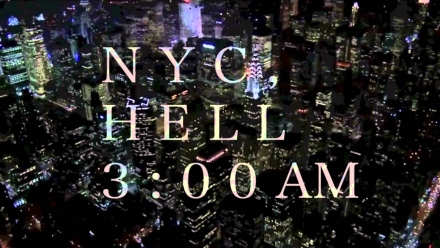
James Ferraro’s come a long way. It’s hard to believe it’s been only two years since Far Side Virtual, Ferraro’s bewildering, maximalist masterpiece of an album, came out. At the time, Far Side Virtual seemed to signify a major transformation in Ferraro from an (extremely) lo-fi, hypnagogic aesthetic to a clearer, more future-oriented sound composed of digital scraps. Yet, as incongruous as Ferraro’s new sound may have seemed, Far Side Virtual still shared a certain over-the-top, witty approach to our cultural detritus that was keeping in line with earlier albums like Night Dolls with Hairspray or On Air. NYC, Hell 3:00AM, however, couldn’t feel further apart from these earlier works, the humor sucked out and replaced with a deeply meditative and somber soundscape.

Not that NYC, Hell 3:00AM should be surprising, per se. Indeed, Ferraro’s most recent release, the mixtape Cold, superficially shares many of NYC’s sonic elements: brooding synths, hip-hop drum beats, Ferraro’s strained and crooning voice, and the occasional piano flourish. On Cold, the hip-hop and R&B elements grounded Ferraro, pushing the songs forward even when the vocals threatened to become completely lost in themselves. In contrast, NYC finds all of the sonic elements—beats included—becoming sucked into a sort of whirlpool of despair. At the same time that the song structures endlessly drift, they never seem to get anywhere. Hell, indeed.


Read more →

What exactly is Ferraro so depressed about? Oftentimes it’s unclear, with Ferraro’s vocals warbling around, subsumed by the music’s synths. When they do come through, they suggest an utter discontent with the city. “City Smells,” ostensibly a love song, feels far more like a lonely individual trapped in himself and his nihilism: “Oh girl I know you want to love me / What it’s like in the empty city.” The elements of the city that do peak into Ferraro’s insular world are dark, verging on the apocalyptic. Computerized voices alternatively announce “breaking news”, “money, money, money”, “AT&T,” and “sextape pixilation.” “Stuck 1” opens with sirens, but even these are slowed down to match the near creeping pace of Ferraro’s universe.

And yet, in spite of its overwhelmingly nihilistic outlook, NYC is immensely listenable. It isn’t quite enjoyable as much as it is cathartic. “Cheek Bones,” one of the album’s most straightforward tracks, exemplifies how relatable NYC can be. Ferraro sings, “I don’t want to get cancer / but these cigarettes give me cancer / and I start to cry." It’s a sort of strangely circuitous logic matched by the song’s formal structure, going somewhere but never quite making it past where Ferraro starts. In spite of how simple the solution might seem to the outside listener—just quit smoking—there’s something eminently understandable about Ferraro on this song, of knowing that one needs to stop something but not being able to bring oneself to. Throughout the track, Ferraro emits a borderline disgusting, gutteral noise that almost sounds as though he’s throwing up. It’s the sort of left-field weirdness that characterized so much of his earlier noise work, but used here for far different means. It’s refreshing to hear Ferraro using all of his tools to so sincerely describe a certain human condition.

Some of the most enjoyable parts of the album, though, come on its few instrumental tracks. Here, NYC comes the closest to flirting with prettiness—albeit a deeply melancholic one. On “QR JR.”, for instance, Ferraro combines wind chimes, drifting pianos, and the occasional found sound sample. The song achieves an impressionistic beauty reminiscent of some of Dirty Beaches’ recent LP, Drifters/Love is the Devil. “Vanity”, though more beat driven, similarly achieves a strange sort of beauty with its looping strings. Throughout both songs, Ferraro adds enough weird sounds to add depth to the compositions, keeping them from being merely sentimental. In turn, such tracks (as well as “Stuck 1” and “Stuck 2”) might be some of Ferraro’s most compelling and challenging music yet. Uncomfortably sitting between sincerity and irony, the digital and the analogue, they construct a sonic space that is at once seductive and off-putting. Such characteristics extend to NYC, Hell 3:00AM as a whole—the album, at once unbearably bleak, is also one that entrances the listener and keeps her listening.

NYC, Hell 3:00 AM is available now from Hippos in Tanks.