


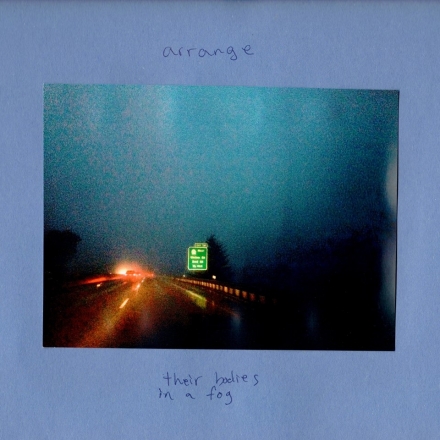
Review: arrange “Their Bodies in a Fog”
04 Mar 2014 — Henry Schiller
The swiveling guitar and tinned blasts of hi-hat that open Their Bodies in a Fog struck an immediate chord. I was reminded of the ephemeral post-jazz sway of The Cocteau Twins’ Heaven or Las Vegas. And it’s true: rather than cramming uncomfortable ambient arrangements into prefigured pop songs, arrange (the recording name of Portland based musician Malcom Lacey) and his Scottish dream pop forebears share a predilection for massaging ambient sensibilities until the delicate skin tears and a rock record starts to bleed out. And it's because of this sonic devotion to the mystical, the vague, and the almighty power of the open chord (admittedly, all gleaned from about twenty seconds of music) that I was so utterly surprised by Lacey’s voice.
Not distant, not dreamy, not 'mystical' in the slightest, Lacey has the kind of voice that would sound perfectly comfortable being featured on a Drake album. Stark but not razed, beefed with only the most appropriate filters, and containing just a hint of that Pacific Northwestern whine that’s kept me an arm’s length from actual enjoyment of a Death Cab for Cutie song. And all of this should be very much at odds with the shipwrecked dream pop and carefully manicured post-dub that Lacey has done such a wonderful job constructing.
The groaning guitars and rattled atmospherics of “Stranger” serve as an unusual platter for a line like “I’ve painted over all the walls but they still seem the same”, seeming instead to owe themselves to a line much more mystical or abstract. But fuck, if the combo doesn’t work so damned well. It's because of this startling disjunction, in fact, that Their Bodies in a Fog manages to be both startlingly - almost uncomfortably - intimate while at the same time maintaining a majestic distance, the width and scope of the Sahara. Lacey’s lyrics are nothing tremendous, nothing meant to vulcanize; but their lilting instigations of indie pop trivialities and contrivances expresses a kind of emotional frustration and sincerity that ambitious overwriters will simply never achieve. The album is like a wild haze of light that you could reach through and reach through until you are pummeling it angrily with open palms, never able to get a grasp of the glowing totem you could have sworn was just inches in front of you.
Contemporary R&B seems to have been as much of an influence on Their Bodies in a Fog as dream pop. “Dream” has the feeling of a track that somehow slithered its way out of something by, well, The Dream. “Alumni” feels rife with the kind of juvenile sensuality that most artists ignore but seems to resonate so specifically and meticulously. The song reminds me of crawling into the grass underneath the bleachers on a football pitch and camping there with friends for a weekend. And that’s not something I have ever done.
The 11 parts of Their Bodies in a Fog are arranged into a slim, coherent vision. Nothing ever feels overwrought for more than the moment where overwroughtness is precisely what’s needed. Lacey is never afraid to seem broken and beaten but he never whines nor pleads – like some ancient Greek hero at the end of a grueling tragedy, he stoically and sufficiently explains. This is the kind of album that, in 2014, I’m surprised to find myself listening to. How could someone who had a moral crisis over enjoying a Sky Ferreira song be so quick to endorse something that I could imagine Bruno Mars vibing out to? I’ll do some music-journo soul searching and get back to you on that one; in the meantime please listen to Their Bodies in a Fog.
The album is out today on Orchid Tapes.