


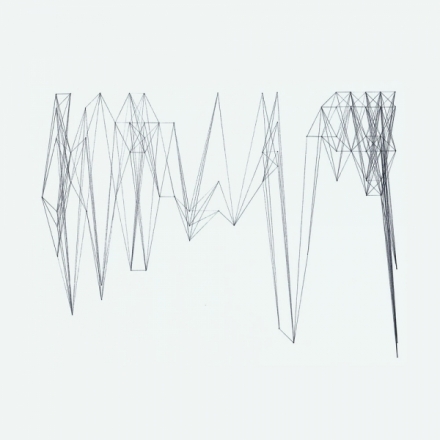
Review: Conveyor “Prime” LP
05 Aug 2014 — Henry Schiller
Since I can remember it’s been possible to buy the scores - not the soundtracks, but the scores - Hollywood films. And ever since seeing the original score of Dante’s Peak being sold on CD in the long-since-closed HMV by my parents' house, I have not understood why anyone would want to do this. The music you are buying was deliberately created to accompany things that are happening on film. It is music you are only supposed to be hearing while you look at these things. It was not meant to be listened to by itself.
Furthermore, consider the following: as long as you have been able to buy film scores on CD, you have also been able to buy the films themselves.
Conveyor's Prime is an album of the aforementioned type: it is a film score album. But it is not boring, or unnecessary, and it does not feel as though it has been deliberately removed from its correct context. Prime is excellent. Prime is better than the film it is ostensibly the score of. Prime is a renegotiation of the film score album into a high concept artistic forgery. The tracks on Prime were written and performed alongside two midnight screenings of George Lucas’ THX 1138 at Nitehawk Cinema in Brooklyn. THX 1138 is as bold and ridiculous a reinterpretation of 1984 as Nosferatu was of Dracula. Blatantly unauthorized and false to the point of becoming an aesthetic archetype on its own. Visually striking, bizarre, and preserved culturally for most, I think, by the image of white-clad bald men being prodded with electrified sticks (or else the in-theater sound system it inspired).
Prime is organized numerically, from “Theme I” to “Theme XIII”, with a melancholy cover of “Words of Love” as something of a coda (probably made for a great end credit sequence). But by the time you get to “Theme VII’, which includes part of a door-closing announcement from the R train, it becomes obvious that you are not just listening to a film score. You are listening to film criticism. Does the R train control the emotions and destiny of its travelers in the same way that the fascist machine of Lucas’ (appropriated) hypothetical future does its citizens? The warbled pounding of “Theme VII” suggests: yes, yes, YES.
“Theme IX” is the closest Prime comes to psychological respite. The track seems to follow the working of gears, the planning of plans – the fall of an empire as seen from the point of view of the bottom-most stone in the imperial palace. Its pebbles happily loosing themselves from the concrete, crumbling to dust. Meanwhile, the subsequent “Theme X” bears a passing resemblance to the backing vocals of a Beach Boys song. But Prime is more of like the devestating crash of ocean on crippled city than it is a righteous Californian wave. Even the most austere tracks on Prime have an implacable sense of tension and urgency. “Theme XI” builds from a series of twitches and jitters into a strike, methodical and precise, but no less fueled by bloodthirst; no less an act of passion. It’s almost off-putting how earthy Prime sounds, how much of the grinding krautrock of Neu! Conveyor seem to inflict their distant futurescape with.
Prime is a reinterpretation; not of THX 1138's original score, but of the film itself. Conveyor seek to evoke the blank-faced, horn-rimmed futurism of Lucas’ dystopian classic; monotony explodes into vengeful angst, which feels itself out as inappropriate, as characters created on swoops of guitar return to their helpless lives.
Prime is out now on Gold Robot Records.