Interview: Erika

06 May 2015 — Taylor Bratches

You could say Erika is an explorer, if not a Renaissance woman. Techno producer and DJ, founder of the long-running Internet radio station Erika.net, member of the Detroit-based electro group Ectomorph, and “co-conspirator” of the Detroit-based label Interdimensional Transmissions, she’s been steadily working – and her music, pulsating like a strange and beautiful nebula – in the Detroit electro/techno scene for over a decade.  Her debut release, Hexagon Cloud – a futurist landscape showcasing her range as an analog producer  – was well-received in the electronic community at home and abroad. After a transportive set at Communikey, the boutique techno festival in Boulder, Colorado, I caught up with Erika about her past and her present, and her experience as a female producer in an endlessly shifting scene.

Read the interview after the break.

Read more →

You grew up in a household influenced by science and technology. Was the intersection of science and music a natural avenue of exploration for you?

Yeah, it was – though [the synthesis of the two] was something that happened for me later in life. I fell in love with music by listening to radio broadcasts in elementary and middle school. I was also heavily into computer games around that age, too. Those were two of my primary interests: listening to music and using the computer. And that’s pretty much what I do now.

Erika.net, which has been in operation since 1999, defines itself as a freeform internet radio station. How did that start?

I knew one day I wanted to be a radio DJ, and I got my start doing college radio when I moved to Ann Arbor, Michigan, for school. That was when I started to get my true music education, because that station has an archive for all kinds of music. I used to go down there for hours and hours – and listen to records and do weird overnight radio shows. I was program director there too. But at some point I wasn’t a student anymore, yet I still wanted that platform, and to listen to music everywhere. And I thought, well, that internet thing exists, I’ll just try that and see what happens.

Hexagon Cloud, your debut album on Interdimensional Transmissions, is impressive in the way it makes the analog sound pliable and ethereal.  What was your process of creation like?  Did you have a clear concept in mind when you set out to make the album?

The process of writing came from the perspective of putting together a live PA. And then I started becoming conceptual – thinking about the Hexagon Cloud: that cloud part of Saturn. I needed some ambient tracks to make it feel like a complete thought, but I started with some individual tunes that began with the idea of a live set, and then used the concept to help fill out the rest.

You’ve been a part of the Michigan and Detroit scene for over a decade. Much of techno’s beginnings were influenced by science fiction. With your science-influenced upbringing, do you feel a part of this tradition? How do you relate to that aesthetic?

I’m a huge lover of science fiction. When I was a kid I basically read the entire adult sci-fi library. That’s what I was into and that’s what I cared about. That sci-fi mentality and ideas of the future are definitely part of who I am and what influences me. When I moved to the Detroit area and heard artists like Rob Hood and Dan Bell – that was mind-blowing; that music really affected me. Those early Detroit underground vibes and artists had a major influence on me musically. I was learning about that stuff around the same time that I was learning about jazz. You could say I was getting a multifaceted, futurist music education on all fronts.

You perform with both analog hardware and with vinyl. Do you have a preference? Can the two inform each other?

Oh yeah, it’s not the medium that makes you a DJ, it’s what you are presenting sonically that really matters. I spend my entire day sitting in front of the computer doing tasks for my job. At the end of the day I don’t want a computer screen blaring in my face when I’m doing creative things. And I DJ with records, mostly. It’s just a personal preference, not a statement or judgment – I’ve seen really amazing laptop DJs and I have respect for all of that.

Do you relate to the music as a dancer?

Oh yeah. I’m a dancer first – at a good party the dance floor is where you’ll find me. If there’s amazing music on a soundsystem, you’ll find me in front of the speaker. 

Does that visceral, physical experience of dance have something to do with your interest in the tactile aspect of DJing?

Yes. That’s what I enjoy about analog – there’s a specific thing that I can reach out and touch and do small or big adjustments on. I really enjoy synthesis and the process of shaping sounds on a synthesizer, but I have a hard time when it’s something that’s trapped in a computer. When I have to use my mouse to get into it, it’s not as interesting, creative, or fun to me.

You are often referred to as an electro artist. How do you relate to that term now? Are you interested in blurring the lines between techno and electro?

I think it’s a super blurred line. When I DJ people say I’m playing all these different genres or types of electro but, in a way, it’s all still techno. And a Detroit DJ is going to play a mixture of what he/she think is awesome – whether it’s techno, house, electro. The term electro has gone through so many changes. I understand why people say I’m an electro artist, because I’m not just using 4/4 beats and because I came into existence as part of Ectomorph, which is a classic Detroit electro project. But it’s just part of who I am;  it’s not where I live. I care about a lot more than just one kind of kick drum pattern. I think it’s also a Midwest thing. I have a background of going to raves in various cities and hearing a lot of different kinds of music. The American aesthetic is very broad-minded. 

How have your collaborative efforts with BMG and Ectomorph shaped you as an artist?

They’ve hugely shaped me. It was through my participation with Ectomorph that I learned how to do live music. I learned how to collaborate with another person, which comes first for me. I got started as someone who was a keyboard tech for Ectomorph live shows, and I learned so much about how a live show feels and works. I just got a lot experience, that I’m really thankful for that. I made every mistake that I could possibly make. I’m so glad I got to do that 15 years ago!

I just saw you perform at Communikey. You were part of a primarily female lineup with Paula Temple from Berlin, Orphx from Canada, and Chicago DJ Christina Chatfield. You also were part of Chicago’s female-centered Daphne series. Can you speak to your experience as a female in the techno community?

To me it’s really similar to my experience as a programmer, or a heavily tech-minded person. It’s the same issue that engineering and math have in the world at large, which is that women get spoken down to, or they’re not believed in – all of the big picture sexist stuff that is a part of our culture, even though it shouldn’t be. In my utopian techno universe this problem doesn’t exist because techno is raceless and sexless and faceless but here we are in a world where there are so few women that hold prominent positions of power, in part simply because there are fewer women participating in things like math, for example. But there is also the issue of women not speaking up and not taking credit, and going with the flow. We get all of this training to be nice and quiet – it’s all over every piece of pop culture in the western world. It’s our job, in a lot of ways, to make sure the next generation of women has better opportunities.

There has been a lot of mention lately surrounding the lack of females in the techno industry, or of subtle and/or overt discrimination against them. Have you yourself faced challenges in relation to this gender disparity?

I’ve never been pushed out; in fact I’ve received a lot of support. Being good at what I do speaks volumes. What you are good at should always take precedence over gender. Back to Ectomorph, when I was traveling with Brendan [BMG] in the 90’s, people would talk to him and not to me, perhaps because of the perception that “she’s just a girl.” I wasn’t upset at the time, but regardless that kind of thing gets really frustrating – when people don’t take you seriously. People will pass judgment about all kinds of things. To a certain degree it’s human nature.

Do you think techno is by nature a masculine sound or is there a feminine power in it as well?

It’s definitely both. When you strip back to techno to what it really is, it’s the heart beat, the life-force. Letting go and dancing is a fundamental human thing that we’ve been doing for thousands of years – seeking a trance state through which to let go. It’s not about being a man or woman, it’s about being an animal trying to have a transcendental experience. Techno seems male heavy because it’s technical – because our society is technical. Frustrating but true. When there’s gender balance, it’s a way better party. When you get that balance and the female perspective, that’s when it’s more whole and more true.

You tour actively in the states, which I think is laudable. Despite techno’s roots in Detroit, more and more American techno artists are moving to Europe. What do you envision for the future of techno in America?

I hope it continues to grow. In the past few years, I’ve seen more and more regional parties, and promoters starting their own small scenes and working with American artists. Yes, there was a Midwest rave scene in the 90’s. But recently – in Columbus, Ohio for example – there are small crews doing really awesome monthly parties. I think we will see more of that in America. Scenes have to be built from the ground up. It takes people willing to be vocal and work in their communities. I hope we see more of it, and we have been seeing more of it.

Certain cities have the benefit of abandoned warehouses, and DIY culture can thrive in those places.  As America’s electronic culture evolves, do you see more people playing in warehouses or in clubs?

The hardest part to deal with, as a promoter, is that you want to have a legit legal venue with an occupancy license because you don’t want to put your artists and sound crew and partygoers at risk. Because ultimately you are throwing a party in an illegal space, which I’ve done myself. But the worst part [of having a party busted] besides losing money, is knowing that everyone has to have this negative experience. In Detroit, now, we are using a place called Tangent gallery and promoters have a 24-hour permit, which keeps it legal and keeps people are dancing until the party is done. The bar laws in America are what make it the toughest, and finding the spaces that exist in that in-between zone – whether it be galleries or art spaces – those are becoming the real places to have a proper underground party.

What’s on your own personal horizon?

I have a few more weekends of traveling and doing gigs – I'll be at No Way Back at Movement, in Detroit.. Then I’m going to stop playing for a couple of months. Because I work a job too, I can’t travel and record at the same time. After doing these next few gigs, I’ll be finishing a new album and a couple EP’s as well. I have so much music I’m sitting on now, but I plan on hopefully getting the album done by the end of the summer so that I can release by early next year.

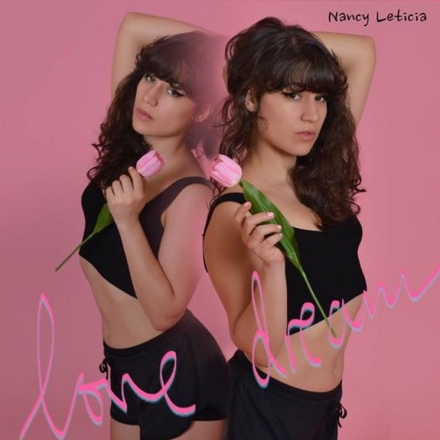
Nancy Leticia “Le Big Mac” (exclusive)

05 May 2015 — Noah Klein

Reclamation.

In 2k15 there are no mainstream female producers. If a world-renowned music festival dedicates a mere tenth of its programming to female artists it’s celebrated as progress. A worrisome amount of sound technicians do not take female musicians seriously and anyone from the unknown performer at a d.i.y. space to an international champion such as Grimes will have their instruments readjusted without permission. This is obviously unacceptable, and to be quite honest herstorically naïve. From Daphne Oram and Delia Derbyshire to Wendy Carlos, Clara Rockmore, and Laurie Spiegel female-bodied musicians have developed the tools, articulated the language, and laid the groundwork for what we broadly refer to as electronic music. There could arguably be no Kraftwerk, no Burial, no OK Computer without these pioneers. I would be thrilled to turn this into an exposition on the correlation between the outsider studies of sound synthesis and the marginalization of the female musician during an era that glorified the white male guitarist drunk on the appropriation of black music, but before I open that thinkpiece let’s take a mome to appreciate a powerful artist at our fingertips: Nancy Leticia.

Today we celebrate the release of Nancy Leticia’s Love Dream, a debut EP composed of seven movements that turn the outside world in. As the anticipated first release on Hot Sugar’s Noise Collector label Nancy’s collection of wondrous compositions is a voice within a larger discussion, and to only internalize the sonic surface of this EP would be a disservice to its process. For anyone who digs into the origins of this collection, or who possibly discovered Love Dream through an enthusiasm for the work of Hot Sugar, the world of associative music is a touchstone. Borrowing from the intersections of musique concrete and hip hop production, associative music is a meditation on our role as aural inhabitants within a world that is constantly sounding off at once. Car horns provoke anxiety and waves crashing on the sand induce relaxation while an empty plastic bag blowing down the sidewalk on a chilly afternoon might only amplify the most passive of existences. What Noise Collector, what Hot Sugar, and what Nancy Leticia encourage is a practice which collaborates with controllable and uncontrollable occurrences in an effort to develop a sound which is reflective of a perspective upon our modern condition. The practice of incorporating and processing these organic sounds into intentional compositions can subliminally invoke a tertiary relationship between the composer, the piece, and the listener. What was traditionally a piece of recorded music becomes a multi-dimensional space that incorporates a geography of feeling and place to become a sound, and a welcomed new field of experimentation in the reclamation of electronic music. Cover your ears with a warm pair of headphones and turn up "Le Big Mac", attempt to define the territories that are introduced, and then welcome Nancy Leticia… we’ve been waiting for you.

Read more →

Interview/Premiere: Pascale Project

05 May 2015 — Henning Lahmann

As Mathematique, Montréal artist Pascale Mercier gave us positively manic synth pop, some kind of 80s-informed proto-charts pop seen through the lens of an extraterrestrial sociologist or, in the words of my esteemed colleague Parker Bruce, music that "sounds like it was recorded underwater in Atlantis". Whatever the association, however, Mercier's work under that moniker was, while usually featuring vocals, heavily focused on the instrumental aspect. Indeed, her voice mostly served rhythmic functions almost more than being included for the purpose of delivering a specific message, as most distinctly shown by Mathematique's stellar singnature tune, "Summer, But I Don't Know". On her forthcoming LP Just Feel Good for a Moment, this has changed. The record is further exploring tropes of classic popular music, which entails a more prominent emphasis on singing along to Mercier's lush synth melodies. Marking the shift with a new name – Pascale Project – the artist's compositions benefit greatly from her newly (re)discovered alto.

Just Feel Good for a Moment will be out this summer. Listen to the premiere of the first single "Super Natural" below and read a brief interview with the artist after the break.

Read more →

What has happened in your life since your tour and the release of Feel?

After the tour I did last summer I played a lot of shows in Montréal, then I decided to take a brake in the fall cause I needed to concentrate on finishing the new album.

Why the name change? Did you just want a new name that you're more comfortable with or is it also a change in your approach to making music?

I had been thinking about changing the name for quite a long time...  But I didn't do it earlier cause I thought it would be confusing for the people and too complicated. But at some point when I was composing the new album, I was having trouble finishing songs and I wasn't sure of what direction I was taking...  It just felt like I didn't have any attachment to 'Mathematique' anymore, I associate this name to the early stuff I used to do, which was instrumental. I just felt like I needed to change my name to be able to finish the album and move forward in my project, it's like a new start, it feels really good and it's inspiring.

Would you agree that while Just Feel Good for a Moment is certainly not a 'sad' album, there are more pensive, maybe melancholic undertones?

I agree this is not a 'sad' album, I would just say that all the songs are about normal feelings, good or bad, and they're just really sincere. I'm just writing about what I feel, I sing mostly about love and life and not thinking too much, I guess the song "Just Feel Good for a Moment" is all about those themes. 

The album feels even more inspired by the glory days of 80s pop than its predecessor. Did you use mainly analogue hardware to record it or was it made on the computer?

I only use digital stuff to make my music, it's all composed with Ableton Live and I also use some external digital synths. I used to make music with analog stuff before but now I'm really not into that kind of sound...  I never wanted to make music that sounds like something in particular, everything I listen to inspires me.

Is Montréal still a good place to be a musician, or is the city changing a lot?

I really enjoy being here, it's crazy how everyone is making music...  I'd say it's not so easy to get your music known because of that, everyone works really hard and it's sad to think that a lot of very talented people will never get the exposure they deserve, because there is just too many bands here. It's mostly a question of luck I guess.

Do you feel like you're part of a healthy creative community there?

Yes, totally, all my friends make very good music and they inspire me a lot, everyone helps each other here. It's nice that all the scenes are kind of blending together and that there's no restrictions, like you can go to a show where the lineup is very diversified but at the same time it all makes sense.

Who is gonna put out the album?

I am working on starting a label called Géocités, with my friend Philip Karneef, who also mixed and recorded my new album as well as the EP I released last year. I also might release it with an other label in Europe but it's not decided yet. 

Are you planning on touring with the album? Is it gonna be solo performances?

Yes, I am coming to Europe again this summer from May 21st to June 24th, touring with Bataille Solaire, another solo project from Montréal. Still performing solo, I enjoy it so much and it's very easy when you travel, hehe.

Will you come to Berlin again?

I will be playing the Torstraßen Festival on June 13th and also at Loophole on June 18th!  Here's the FB event of the tour if you wanna know when and where we're playing.

Oni Ayhun, rRoxymore, Aquarian Jugs & Jaguar Woman “Decon/Recon #1”

24 Apr 2015 — Evelyn Malinowski

Paula Temple's Noise Manifesto label does indeed comprise a manifesto: it summons consideration of a mentality wherein human interactions are seen as noises shooting around in synthesizers, non-phallically processed and mixed to create an altogether original product. The label, then, is a resource for cultivating new or distorted forms of remix, album, collaboration, release, and series, an altering practice which is certainly meant to be applied to other areas of society and life.

"Decon/Recon," as in "deconstruction/reconstruction," is a brand new series that offers fodder for producing dance music differently as well as an offhanded guessing game of who wrote what part. The EP is a symbiotic display of styles by Berlin-based artists Oni Ayhun, rRoxymore, Jaguar Woman (Paula Temple), and Aquarian Jugs (Jam Rostron aka Planningtorock). The tracks are not created by one person and then passed on; they are each made of different parts and samples produced freshly for the occasion by the four artists, passed around, like a fragmented techno band playing hacky sack in different buildings. Thus, "Decon/Recon" is a statement, a co-operation, and a much needed return to the puzzled heart of techno, all under a playful and nearly improvisational feel.

"DR1-1" dribbles breakbeats and clamors saxophones like that of Planningtorock's distinctive style. Meanwhile, the claps pick up protestingly, as if Oni Ayhun has been asked to play digital glass bottles for The Knife. "DR1-2" nurtures a rainy day, cardboard box atmosphere that might be otherwise seen in rRoxymore productions before slipping into a chimey dischord and metallic hit on the 3-count, which is reminiscent of Temple's idiosyncractic language of percussion. Again on "DR1-3" we are confronted by pieces of what seems like PTR's arsrenate orchestra and more beats that could have come from Temple. "DR1-4" is at first a samba, housey track that yields to a break down of linear drive and spirals downward, or upward, perhaps sideways, whose melody could possibly be attributed to Oni Ayhun... but who knows.

Overall, "Decon/Recon" is a tasty collaboration. You can hear the concept behind the music; you don't necessarily need the words which also eloquently state the purpose of the project, provided that you listen properly. It is musically as well as aesthetically progressive, with a certain type of beauty floating around somewhere nearby. It enables us to travel through neighborly uncharted territories, with smiles one our faces. We can hear the individual talent merging together softly and perceive of the succinct and prideful execution of this task of returning fragments into a whole. Furthermore, we can hear the friendship among these musicians, the community they provide for each other, and that type of message combined with the circularization of such politically motivated music is rather complementary to recent debate and dispute about the state of gender in electronic music, not to mention everywhere else in the world.

Read more →

Live Review: Colleen Green at Brooklyn’s Shea Stadium

23 Apr 2015 — Ethan Jacobs

Since Colleen Green’s official full length came out on Hardly Art in February, I’ve been totally enthralled by her distinct fuzzy sound and unmistakable, terminally-chill demeanor. On I Want To Grow Up, Green traverses the ups and downs (mostly downs) that accompany the societally imbued pressure of growing up. The tracks on Green’s debut alternate between bubblegum pop and belligerent fuzzy textures, mirroring Green’s inability to decide if growing up is all it’s made out to be or just a hoax, respectively. My favorite parts of the album are the intensely lo-fi, loud moments where Green regresses into her juvenile behaviors like doing drugs or staring at the TV—the responsibility required to “grow up” is too heavy during these moments and the volume of instrumentation totally envelopes Green in a stoned comatose.

When I went to Shea Stadium in Brooklyn to see Green perform songs from her new album, I was mainly looking forward to the prospect of being swallowed by the loudness of her music—the same thing I instantly loved about the record. However, the songs that Green performed live didn’t hit as hard as I had hoped because the sound wasn’t loud enough—she felt bigger than the music, whereas I wanted the opposite. It was the largest crowd I’ve ever seen at Shea Stadium, so I was expecting Green’s sound to devour the room to compensate for the fact that there was one of her and more than a hundred of us. Between songs Green kept asking the audience, “Is it loud enough?” For the sake of not being “that guy,” no one really spoke up until about half way through her set when the crowd unanimously decided it was time to crank up the noise. This happened just in time for “Grinding My Teeth,” one of the fastest tracks on I Want To Grow Up with an ostensible punk aesthetic.

Green redeemed the performance in other ways, namely just by being herself to the utmost: She maintained charming banter with the audience between songs, specifically on her desire to smoke a lot of weed once the show was over. It's such a turn off to see a musician act superior to an audience, so the humility in Green's ability to interact with us on a personal level was deeply appreciated. Still, the first half of her show left me underwhelmed. Sometimes you just have to turn the volume up--way up. 

I Want to Grow Up is out now on Hardly Art.

Read more →

Review: Godmother “Transgenre”

22 Apr 2015 — Lukas Dubro

Joey Hansom is a person who cares. Over the last couple of years, the artist has tried to push Berlin's alternative scene forward on different levels, whether on the forefront as performer and DJ, or in the background as producer and event organizer. Last month saw the release of Alexander Geist's soaring new single "Malediction", which Joey co-wrote and -produced, and he is also behind Expatriarch, a platform to showcase queer/feminist music in the city, as well as the Boo Hoo party.

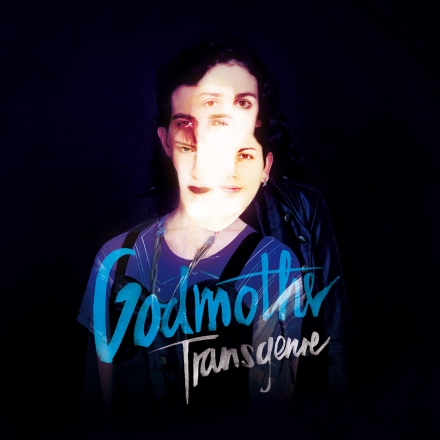
Perhaps most notably, however, Joey has a band called Godmother that are set to release their new EP Transgenre this week. Joey started the band a few years ago as a project where he didn't have to "make compromises," as he told me once at a party. And this is exactly what it feels like. He not only has a clear vision of what he wants, he also puts a lot of effort into making it come to life. "It's a challenge sometimes, because this is all very DIY, but I'm not aiming for a lo-fi aesthetic," he explains. Yes, whether with arrangements or eyeliner, Joey likes to lay it on thick. Transgenre collects four catchy songs, with a theatrical approach recalling Queen, David Bowie and Of Montreal (yet with a distinct lack of guitars). Style and substance unite.

Godmother songs don't have just a musical directness, they have a clear message. "MTFTM" is about finding utopia beyond the gender binary system, while "One-eyed Snake Oil" is an ode to the failure of hegemonic masculinity and capitalism. This mixture of pop and politics is never heavy-handed, though. With his lyrics, Joey proves that he has a great (and deranged) sense of humor: "Now all our troubles we forgot 'em, because we're topping from the bottom," he sings in "MTFTM". "We're living in a no man's land, no dicks, no tits, just our prostate glands."

Do we need more people like Joey in Berlin? Yes. These are the heroes that are capable, whether behind the scenes or in the spotlight, of helping to achieve a greater good and sustaining a vibrant music community in the city. Joey is a prime example of someone who doesn't follow styles and trends, but has cultivated his own significant path and voice.

His new EP will be released on Joey's own label New Pangea as an edition of 100 cassettes and as a free download. Berliners can catch Joey, Rocco and his bandmates T-Word and Sara onstage for the Godmother release concert at Mitte's ACUD (Veteranenstraße 21) this Friday, April 24.

Read more →

Live Review: Kiasmos at Dublin’s Opium Rooms

21 Apr 2015 — Andrew Darley

Ólafur Arnalds has made a quick turnaround in returning to Dublin. After his theatre show with his band in March, he has returned a month later for an entirely contrasting performance. Kiasmos is the music collaboration of the Icelandic composer and fellow musician Janus Rasmussen best known for his work in the electronic outfit, Bloodgroup. The pair released their self-titled debut album in 2014, which became one of the most compelling records of the year. They took reference points of each of their work to date and concentrated on pushing them further – interweaving dancebeats, string arrangements and sparse piano motifs – to make an album of vivid imagination and wistful memories. The swirling sound of the album’s opener, "Lit", blanketed the crowd in the Opium Rooms before the duo reached the stage. Behind the decks of two laptops and other digital equipment, they radiated a great bond between each other. Their midnight hour-long set featured songs which did not stray far from the album recordings amongst plateaus which saw the two jump around behind the decks like mad scientists finding the newest discovery. "Thrown" twinkled with its xylophone melody and propulsive bassline, while they closed out the set with the rumbling basslines and abrasive takes on "Bent" and "Burnt". They also featured new songs which were up-tempo and more techno-driven. Overall, it was an enjoyable set and fascinating to watch Arnalds perform outside of his contemporary classical context. With the strength of their chemistry together, it may prove rewarding if they incorporated other musicians on stage to play strings and piano, which could potentially give new life to their songs in a live setting.

Read more →

Ellis Swan “Dice Rolled”

20 Apr 2015 — Zachary Taube

Chicago-based songwriter Ellis Swan is a musician with a knack for mood. For me, his songs conjure up mythological imagery of the American south, of driving down an endless country road at night, of that mysterious glow that pulsates from beyond those trees, of cigarillos and longing and the devil and sweat. I listen to Swan and imagine Screamin’ Jay Hawkins trying to sing a lullaby to his granddaughter.  Dice Rolled, a song recorded for but ultimately left out of his brooding 2014 I’ll Be Around, is as ghostly as it is laconic, a murmured memory of loss and envy that pulsates to an unchanging beat, that builds into a whisper, that floats down the river and gets snagged on an ancient willow.

I'll Be Around came out last September. Check it out over here.

Read more →