In anticipation of the German premiere of Montréal music documentary A City Is An Island we have talked to the director Timothy George Kelly. The film will be shown at Kino Babylon Mitte on tomorrow, June 11 at 8pm followed by a Q&A with the director, musician Sean Nicholas Savage and artist Jason Harvey.
This interview was first posted on the website of Torstraßen Festival. Read it below the break.
Read more →
Your film illustrates how ambivalent many Montreal musicians are about self-promotion and even success. Did you encounter resistance to the project of documenting the Montreal music scene? If so, how did you convince people to be involved in your documentary?
There were different levels of resistance from different people. Younger artists are more often self-conscience, excited for a platform to talk and then afterwards sometimes wishing they had never done it at all. I think there is a real pressure now because of the internet, having to tour, having to have a press photo and music videos, it asks for an identity from young artists who may not know who they are yet and they are forced to cement that in recorded document that is in someone’s else’s control, which can result in a neurotic episode from some.
A lot of the older people who didn’t want to be in the film were just passive aggressive, which I would fire back with my greatest weapon, the never ending persistent weekly email. Mauro from Godspeed You! Black Emperor straight up told me to fuck off which I thought was pretty cool. There was this strange attitude from some of the nineties and early 00s crowd that making a film about the Montreal scene would somehow reveal the secret of the place and the floodgates would open. I grew up on a farm in Australia pretty much the furthest distance from Montreal possible, it ain’t a secret no more. The secret they are thinking of is just nostalgia for a time when their hangovers were more tolerable.
Most of the musicians in the film are solo artists. Is there something particularly solitary about Montreal life?
It’s economics of time and money. You have to tour now, touring with one person is way more affordable than multiple – and technology, people are create huge sounds with gear that didn’t exist ten years ago. Macbook Pro rock stars. And of course, winter. If you are solo, you don’t even have to leave your room.
You use a lot of live performances in the film — in venues, homes, and outside in Montreal city space. Why was that important to you?
I asked the artists where they would like to play. It was a way to document the space of the city whilst giving the audience what they want from a music documentary: music.
You spend a significant amount of time on language politics in Quebec, and the tension between French-speaking Quebecois and Anglo “ex-pats” who are mostly from other parts of Canada. Not knowing French is a weirdly big aspect of living in Montreal. Do you speak French? In your film, Brendan Reed compares asking this to asking someone about their sexuality. Do you agree?
One of my first jobs in Montreal was delivering sofas, my French never really improved from what was required there. I wouldn’t say Brendan is directly comparing sexuality and language, he is using sexuality as an example of something that is very important to someone’s identity which could result in people feeling isolated or ashamed. Anglophones feel guilty for their laziness in not ingraining themselves in the predominant language of Quebec, but the shame comes from language politics being in the fabric of Montreal culture and the anglophone being the perpetual outsider, the voluntary outsider, the lazy outsider, which leads to for so many to be the temporary citizen. It is this that makes them eventually leave.
What compelled you to make this film? Put another way, why did you feel it need to be made?
I am a filmmaker. I had no money to make a film about something made up, so I made a film about what was in front of me.
What kind of response has it had, in Montreal and outside?
Really well. I am just happy people completely ignore the technical issues the film has and see it has a heart, it was shot on a camera that is worth $150 now so I sit in the cinema at these film festivals and just feel like a kid, a pretend filmmaker, a liar, where all the other films that play have logos of companies and state support at the end credits. It is strange how something doesn’t look official until you put some kind of logo on it. Our brains love symbols.
Your film is about artists in Montreal, but your voice is absent. Why did you choose not to include yourself in it?
My voice is in it. It is everywhere. 90 hours of footage cut into 72 minutes. What is in it, what isn’t, that’s my voice right there.
Can you tell us a bit more about yourself?
Australian. Moved to Montreal in 2008. Now based in London, UK. Have very little patience for shit fruit. I like painting, whisky and napping.
What are you working on next?
I am making a documentary about a techno collective called John’s Kingdom in Moscow right now. They are pretty interesting, all friends who somehow have a very similar sound, which in the world of Ableton and digital music creation where anyone who can work a torrent basically has an endless palette of sounds, is quite rare.
And then when I am back in London I will start another film in reaction to what Katie Hopkins has been saying about immigrants. The window of what has become reasonable to say in the right-wing press in the UK is disgusting and needs to be fought against, we are in an information war and it is very loud and very confusing and very fucked up. So I am going to make a film asking only egalitarian revolutionaries their opinions of the police, what it is to be human and if a policeman can be one. No one will care about the film of course, but it’s worth trying anyway.
Noise Manifesto's series "Decon/Recon" will be deconstructing and reconstructing live June 19th, at Arena Club Berlin. The project involves rRoxymore, Aquarian Jugs aka Planningtorock, Jaguar Woman aka Paula Temple, and Oni Ayhun. The showcase will involve cooperative visuals from queer-feminist porn director Marit Östberg and video artist Tania Gualeni. Apart from the project saying hoards about the aesthetic significance of collaboration, it moreover offers a kind of game where you might try to pick up on whose distinct styles appear during varying parts of each segment or track. Much to our surprise, styles prove superfluous, as these artists mimic each other and end up producing sounds that are utterly unique to the circumstance. It is true human synthesis performed within the aural dimension.
We are giving away two sets of a pair of tickets for the event. In order to win, write to submissions@nofearofpop.net and let us know that you know the true identity of Oni Ayhun. Deadline is next Wednesday, June 17th.
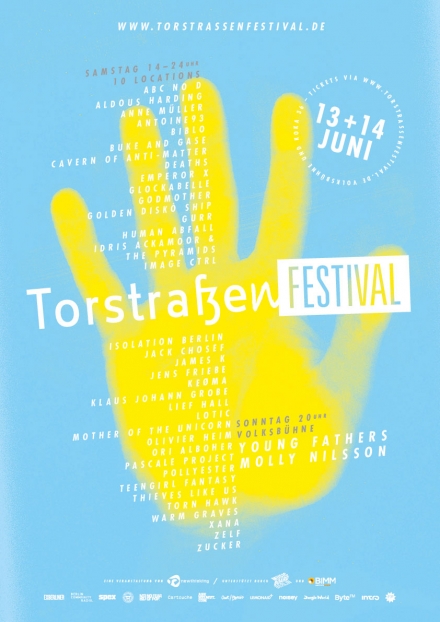
First things first: For those of you who are experiencing a feeling of confusion and disorientation right now, silently wondering in mild despair, "How did this year pass by so quickly?" – fear not! Your memory and sense of time are totally fine. Due to a couple of more or less interesting, somewhat disruptive circumstances (in case you're actually wondering: the end of Berlin Music Week, its replacement Popkultur, and in some way probably even this superfluous oddity named Lollapalooza® Berlin), NFOP's favourite local music event Torstraßen Festival has been moved to early June instead of the last weekend of August. From now on marking the beginning of the summer festival season rather than its end, the shift entails the additional benefit of further underlining the humble festival's forward-looking, adventurous stance that keeps focusing on both Berlin talents and artists positioned subtly yet firmly left of the field.
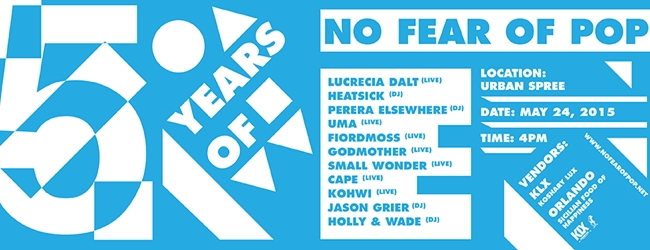
Unlike the last years, the fifth edition of TSF not only occupies the better part of this weekend's Saturday but will have a bonus night on Sunday, with an official closing concert at the mighty Volksbühne. No Fear Of Pop is once again proud to be official media partner of the Mitte brouhaha – and as things are already so close, please allow us to make some recommendations for the festival below. Be sure to check the complete schedule in a neat map over here.
Read more →
Gaststätte Prassnik
The cosy little pub will be coloured in red and white for an all-Canadian experience with some of our favourite artists at the moment: Berlin resident and Urban Spree master of sounds Lief Hall should be familiar to our readers by now. Her recent show at West Germany featured some staggering new material, so you should definitely come by at 5pm to finally check her out if you haven't done so yet. Lief will be followed by recent Berlin via Montréal transplant Antoine93, who you might also know already from his superb performance at the NFOP four-year anniversary bash at Sameheads last year in February. If not, be there! Antoine now comes with the additional merit of having been selected as one of the three Welcome to Berlin participants for some extra fame courtesy of our friends at BCR, i-D, and Musicboard. Well deserved, we'd say (we've also voted for him, cough). Antoine93 will perform at 7pm The maple leaf trio will be completed at 9pm by wonderfully out of control Pascale Project aka Pascale Mercier fka Mathematique. We recently had the honour to interview her and premiere the first single from her forthcoming LP, check that out right here.
Roter Salon
Volksbühne's Roter Salon is set to host some serious Berlin art school vibes with appearances by local luminaries Deaths at 6pm and Golden Diskó Ship at 8pm. Just like Antoine93, the former have just officially been announced as participants at Welcome to Berlin, and the video for "Sold" should be sufficient to tell you why. Comparisons to various hyped projects have been made by others, but we don't do such things. Mostly. Usually. Sometimes. Compared to Deaths, multi-instrumentalist and Berlin Current alumnus Theresa Stroetges aka Golden Diskó Ship is almost to be considered a veteran, having performed at Berghain's main stage opening for Kuedo and Forest Swords last year. Stroetges' take on contemporary pop is sophisticated and remains pretty unique this side of Berlin city limits, and the dignity of Roter Salon seems like the appropriate venue for this sort of thing.
Ackerstadt Palast
So, we like Hamburg duo Zucker. We like gritty guitars and we think Ramones covers are okay if translated into German and post-ironically performed by two women. We even think that they can pull off naming a song "Trümmerfrauen". This is punk, after all. No post. Then again, their Soundcloud states "Genie-Noise-Minimal-Avantgarde-Pop". So indeed very post, after all. Come see for yourself and argue with us about classification. And listen to something German, ffs. 7pm. By the way, we are aware that we just said that you should be at Gaststätte Prassnik at that time as well. But that's really not our fault come think of it. The same issue reoccurs two hours later when Istanbul-based Biblo enters the stage at Ackerstadt Palast, and here we're truly conflicted. We stumbled across this highly talented artist two years ago when she collaborated with Brazilian beatsmith Pazes, but her solo stuff is actually so much more compelling, which is why her show would deserve everyone's undivided attention – were it not for all the other things going on simultaneously. We're afraid that we really can't help you here.
Platoon Kunsthalle
Dark and forward-thinking, Platoon is responsible for the artsy electronics. Torn Hawk, to whose 2014 Let's Cry and Do Pushups at the Same Time LP on Mexican Summer you absolutely need to listen to, is one of the many guises of Luke Wyatt, and it's arguably his most adventurous and compelling venture. See for yourself at 9pm (if you're not somewhere else, see above). Teengirl Fantasy on the other hand shouldn't need an introduction, really. The Brooklyn house veterans and nicest guys ever (who I interviewed for EB years ago) return to Berlin for a one-off show at 11pm. The duo's most recent material shows laudable creative development, so be there.
Also highly recommended:
And on and on, there's so much more to be seen, so let's quickly point to Emperor X, who will present his very own take on familiar folk tropes at Z-Bar at 4pm. If you're a reader of this site and/or came to our five-year anniversary at Urban Spree the other day, you'll already know what to expect from a Godmother show: the most queer fun/fun queers in town. Usually only coming out after sunset, their 5pm spot at Sankt Oberholz is one of the rare opportunities to see them in broad daylight. Just in case you need further arguments. Speaking of queer culture, Lotic's widely reported response to the recent GFOTY and Ten Walls outrage is today's essential reading material. Once you're done with that, be sure to see his avant-garde approach to contemporary culture live when Lotic exhibits one of his live performance/DJ set hybrids at ACUD at 10pm.
Volksbühne // Sunday
As already mentioned above, this year TSF will feature a second day, which really consists only of a highly compelling closing night at the Volksbühne main stage: the excellent Young Fathers will share the evening with Berlin mainstay and local pop majesty Molly Nielsson – the appropriate way to end what is set to become the most exciting edition of Torstraßen Festival yet. See you on Saturday.
It is a generalization to say that there is a fundamental difference between being a musician in Europe and being a musician in North America; one depends on an economic infrastructure while the other on a web of interconnected communities. It’s a generalization, but it is an essentialism that keeps resurfacing. There’s more public funding for the arts in Europe, being a musician is legitimized. With greater clout comes money, and the industry doesn’t seem to be collapsing like it is in America. There are more promoters, bookers and labels. And, for the musicians themselves, practice follows suit: Artists seem to turn more inwards on this little continent. Maybe it’s America’s longstanding rhetoric of DIY ethics that has kept that tradition alive, but these days, with their industry crashing and burning, it seems deeply practical to play in your neighbor’s basement instead of the club down the street. Being in a band with your friends is how to survive.
So when Stockholm’s Star Horse sell friendship bracelets as merchandise and organize the grassroots Fuzztival music festival intended to nurture a community, it comes as a pleasant surprise. The band, led by Maja Thunberg and Andreas Ryberg both on guitar and vocals, have been honing their shoegaze sensibility since 2011. What gives Star Horse their emotional resonance is the conversational dynamic between the two singers-- none better exemplified by their new single “Slower Now.” Thunberg’s melody soars while Ryberg interjects each chorus, “Come to me,” and she answers back carrying some obscured narrative along. Beckoning a lover or friend, this is a song that belongs to everyone.
Stream “Slower Now” exclusively below. The 7” single along with its B-side “Wherever You” comes out June 9 on Star Horse’s label Häxrummet Records and is available for preorder now.
Palm Wine Revisited is the second full-length album from Tasseomancy, the Toronto-based experimental folk project of twin sisters (and former Austra members) Romy and Sari Lightman. The Lightmans, along with percussionist Evan Cartwright and multi-instrumentalist Johnny Spence, have delivered an album of haunting pop tracks on which nuanced vocal melodies soar over cleverly minimalist production.
Early Kate Bush should jump out as an immediate point of comparison for Tasseomancy’s particularly theatrical brand of off-kilter folk. And just as Bush’s music is evocative of a pre-Roman notion of British mysticism, Tasseomancy seem similarly indebted to the eerie splendor of cold North American woodland. “The Grass Harp” has the rickety, Elfman-esque theatrics of a chase through some sinister forest, but then surprises with a squeal of overdriven guitar that snaps you back to a land where music is recorded onto digital interfaces, and does not just emanate naturally from trees.
The production on Palm Wine Revisited places a unique focus on timbre, with sections on each song highlighting the interplay between the Lightmans’ powerful vocals and one distinct instrument. Though melodically rich, the tracks have been mixed in a way that is pleasantly minimal; this allows for a more confident display of subtle melodic hooks that might otherwise be lost behind overbearing instrumentation. The second half of the title track, for example, is full of small vocal twists that could easily have been buried behind less experienced production.
Palm Wine Revisited is a haunting album; one that sounds distinctly capable of filling out the space of a large theater. Tracks like the hauntingly sparse “What Life Must I Lead” request to be inhabited: rather than automatically move from track to track, Palm Wine Revisited walks you from room to room in a large, abandoned warehouse, converted piece by piece into a recreation of some ancient forest.
The sisters are about to embark on a brief tour that includes an appearance at cherished Fusion Festival halfway between Hamburg and Berlin, and a show at Berghain Kantine at the end of June. Find all dates below:
June 17 // Toronto ON // NXNE @ Mod Club
June 18 // Montreal QC // Bar Le "Ritz" P.D.B
June 23 // Amsterdam NL // Paradiso
June 24 // Paris FR // Pop up Du Label
June 25 // Toulouse FR // Siestes Electroniques
June 27/28 // Lärz DE // Fusion Festival
June 29 // Berlin DE // Berghain Kantine
An intriguing solo piano tape here from the previously unbeknownst to me Scottish musician (or group?) Clade, which came carefully sheathed in one Vietnamese Dong note. Recorded on nothing more than a happened-upon upright across a single evening in Hanoi, Vietnamese Piano sounds as if it was recovered following a devastating nuclear blast.
An obvious reference point is the aquatic, shimmery daydreams of Harold Budd, but this is even more decayed. The piano in question appears to be sitting in a derelict building surrounded by rice paddies, with missing teeth and vines sprouting from the lid. There is complexity here though, not just in the chords that pleasantly cluster and orbit like moths around a lantern, but also in the range of frequencies and timbres eked out of this old box. What's left is a meditation on something man-made being gently reclaimed by the earth around it; denatured by nature.
A few cassettes of Vietnamese Piano are still available, grab one while you can here.
Much like the explosion of chillwave artists that emerged from the wake of acts like Washed Out and Neon Indian circa-2009, we’re beginning to see a handful of bands that will undoubtedly garner comparisons to Tame Impala for daring to dip back into the sun bleached coffers of 70’s nostalgia. But chasing the sound of psychedelia comes with some caveats. It’s difficult for a band to harness the potential that comes from this pursuit, as the line between controlled chaos and an unstructured mess runs thin.
Fortunately, Toronto-based Grounders isn’t one of those bands. The quartet is set to release their debut LP this summer, Grounders, and have a new single dropping this week, “Drawing Space.” The jangled guitars and upbeat tempo contrast with the lo-fi vocals to create a disorienting sense of melancholy. The result is a surprisingly refined track that challenges what a traditional psych-pop song should be. What separates Grounders—and elevates the genre itself—comes from the intricacy of their lyrics, and how what’s being said is enhanced by the instrumentation, not buried by it.
After an eight-year intermission since her Overpowered record, Róisín Murphy unassumingly ushers her new album in. Channeling New York Ball Culture and its seminal Paris Is Burning documentary, one may have anticipated album opener "Gone Fishing" to be a ballsy dance romp. In fact, it’s quite the contrary. With an off-kilter arrangement, she invokes both the liberating movement in gay history and her own path as an artist (“Found a place to express my soul, Won’t go on in the shadow’s hold”). Its obscure strut makes abundantly clear that she’s traveling a new path compared to her previous disco-driven dance album.
Written, recorded and produced with her longtime collaborator and friend, Eddie Stevens, Hairless Toys is an experiment in meeting of minds. With almost twenty years work together, as Moloko’s and own touring musical director, this is the first time the two have written. Fascinatingly, the album’s energy is similar to her former band’s best work in how they delivered perplexing concoctions of genres that blend effortlessly together. The record is driven predominately by minimal house, funk and country influences, yet rises above all of them too. The way in which they are filtered through their collaboration resulted in strange and music with a further emphasis on the lyrics and their potential meanings.
Her physical image (referencing an imagined woman of the 70s with a penchant for stylish nylon) further punctuates a new expression. Her career is dotted by an interest in pushing the boundaries both musically and visually. The cover art echoes her departure and artistic transformation. Her debut solo record, Ruby Blue, found her ground as an artist in her own terms under the experimental, home-spun productions of Matthew Herbert, while Overpowered was its pumped-up clubkid sister. In this light, Hairless Toys, for want of a better term, is a ‘grown-up record’ about growing up. Its eight songs are nostalgic of time past amidst finding comfort in the present.
The record’s production and arrangements are ambiguous - several appear to be designed as subtle, quiet and often challenging. An unquantifiable tension and unrest underscores Hairless Toys. Her songwriting has shifted from pop hooks to focusing on melodies that ride over the music and the story they carry. As the majority of collection span six to nine minutes, a wandering quality emerges in how noises and instruments drop out as quickly as they arrive. Thundering percussion sanctions "Exploitation", lasting 30 seconds, before withdrawing to give way into its nine-minute meandering, woozy bass line. A jarring diversity of styles demand repeated listens to grasp its remit, like the blinkering funk of "Evil Eyes" or how "Exile" takes the album by its legs and throws it headfirst into country music. "Unputdownable" closes the album out with an ode to falling passionately in love and being consumed by a life-defining relationship (“You were my favourite book and I love reading between the lines”). It brilliantly balances the acoustic and electronic worlds with an uplifting, soulful chorus.
Róisín Murphy is an artist at the helm of her career, in love with the process of creating music and the riches she can unearth while doing it. Alongside Eddie Stevens, the pair have created a work unconcerned with instant gratification of its listeners, preferring to discover unknown territory instead. Characteristically driven by performance, these songs are a platform which blend wisdom, sadness and humour – all delivered with Róisín’s inimitable personality. Their collaboration has birthed a collection subdued in nature which leave a feeling of something unrequited. It paces itself in a slow reveal and its refined energy maintains an uncertainty of how it should be understood or experienced – once you think you’ve grasped it, it changes into something completely different. An intrinsic authenticity runs through Murphy’s work to date and this album is no exception in how she boldly executes her artistic vision.





_293_426.jpg)